Blog
Atrial fibrillation
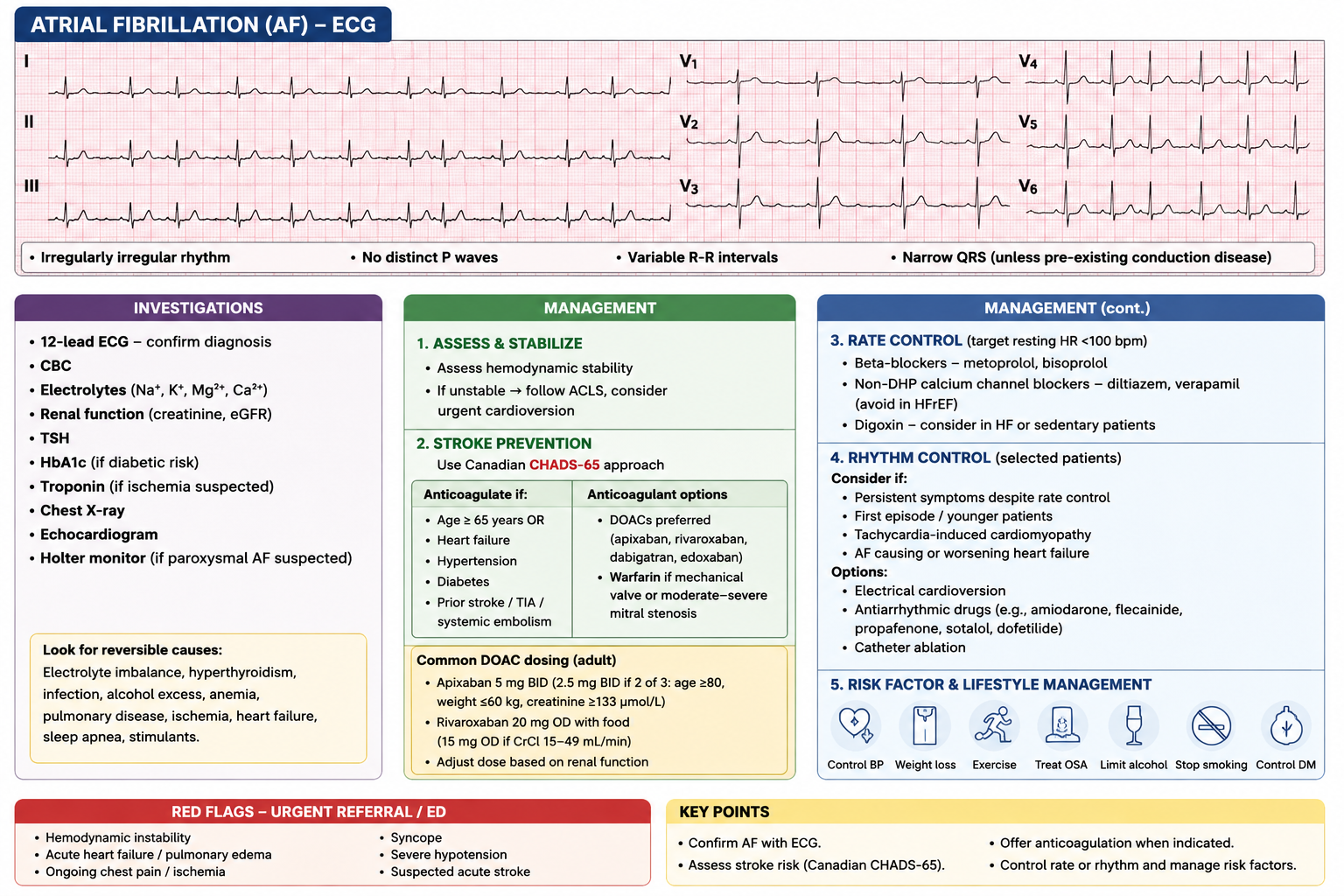
Atrial Fibrillation: A Quick Guide
Atrial fibrillation (AF) is the most common sustained heart rhythm disorder seen in clinical practice. It causes the heart to beat irregularly, increasing the risk of stroke, heart failure, and other cardiovascular complications if left untreated. Some patients experience palpitations, shortness of breath, fatigue, dizziness, or chest discomfort, while others may have no symptoms at all.
Diagnosis is confirmed with a 12-lead ECG. Initial evaluation should also include blood work to identify reversible causes and an echocardiogram to assess heart structure and function. In Canada, the CHADS-65 approach is commonly used to identify patients who would benefit from anticoagulation to reduce the risk of stroke.
Management focuses on three key goals: preventing stroke with appropriate anticoagulation, controlling the heart rate or restoring normal rhythm when indicated, and addressing modifiable risk factors such as hypertension, obesity, diabetes, sleep apnea, smoking, and excessive alcohol use. Regular follow-up and adherence to treatment are essential to improve long-term outcomes.
Early recognition and evidence-based management can dramatically reduce complications and allow most patients with atrial fibrillation to live healthy, active lives.