Blog
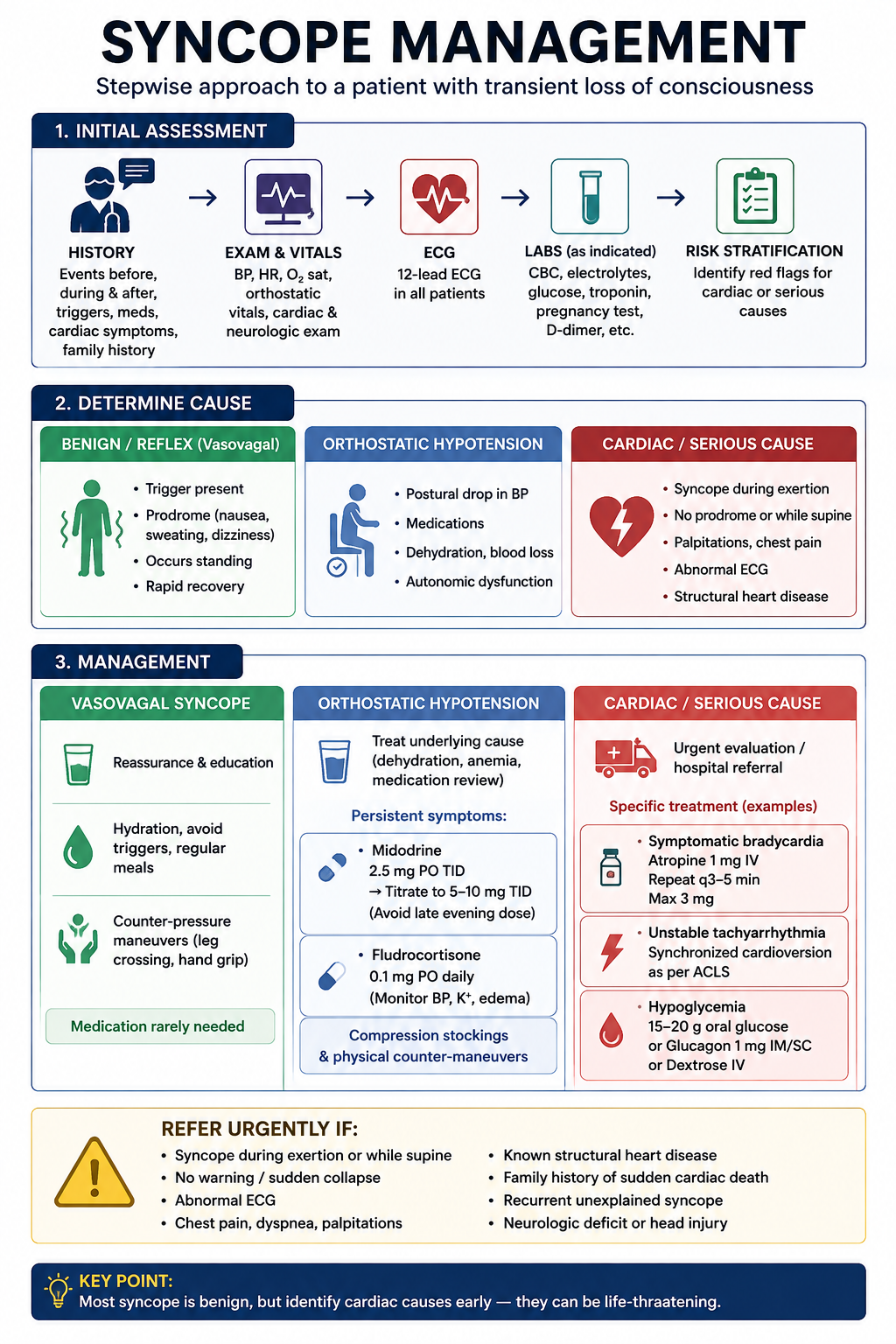
Syncope
CARDIOLOGY
MCCQE/CCFP SAMP / TDM (THERAPEUTIC DECISION-MAKING) / USMLE STEP 2 CK/MRCGP/AMC CAT MCQ/PLAB1
Study More with TopQBank & the Pocket Guide Series
For additional exam-style clinical cases and practice questions, visit TopQBank.com, an educational question bank designed to support preparation for medical licensing examinations including MCCQE1, CCFP SAMP, TDM, USMLE Step 2 CK, PLAB, AMC, SMLE, and others.
For concise clinical review and practical point-of-care learning, explore The Emergency and Primary Care Pocket Guide Series, developed to provide quick, practical reviews of common presentations encountered in family medicine, emergency medicine, and medical licensing examinations.
Use these questions to test what you learned from the TopMedCast Syncope episode.
Q1.
A 67-year-old man presents after a sudden loss of consciousness while walking. He collapsed without warning and regained consciousness spontaneously within approximately 30 seconds.
He denies preceding nausea, sweating, emotional stress, or prolonged standing. His wife reports there were no tonic-clonic movements, tongue biting, or prolonged confusion.
Past history includes hypertension and previous myocardial infarction.
Examination
BP: 128/76 mmHg
HR: 48 bpm
RR: 16/min
O2 sat: 98% RA
Cardiovascular examination reveals a systolic murmur.
ECG demonstrates sinus bradycardia with intermittent high-grade AV block.
What is the most concerning cause of his syncope?
A. Vasovagal syncope
B. Orthostatic hypotension
C. Cardiac syncope due to arrhythmia
D. Epileptic seizure
E. Hypoglycemia
Answer: C. Cardiac syncope due to arrhythmia
Key Points
- Sudden syncope without prodrome, particularly during exertion or in a patient with structural heart disease or an abnormal ECG, is concerning for a cardiac cause.
- High-grade AV block can cause abrupt cerebral hypoperfusion and syncope.
Q2.
Which finding in a patient presenting with syncope is the strongest indication for urgent hospital evaluation?
A. Syncope after seeing blood
B. Nausea before fainting
C. Syncope with abnormal ECG and known structural heart disease
D. Prolonged standing before syncope
E. Feeling warm before losing consciousness
Answer: C. Syncope with abnormal ECG and known structural heart disease
Key Points
- High-risk features include abnormal ECG, structural heart disease, exertional syncope, syncope while supine, family history of sudden cardiac death, significant bradycardia, and syncope associated with chest pain or palpitations.
- These patients require urgent cardiac evaluation and monitoring.
Q3.
Telemetry confirms recurrent symptomatic episodes of complete heart block, with ventricular rates of 30–35 beats/min.
What is the most appropriate definitive management?
A. Metoprolol
B. Permanent pacemaker implantation
C. Fludrocortisone
D. Increased oral fluid intake only
E. Sertraline
Answer: B. Permanent pacemaker implantation
Key Points
- Symptomatic high-grade or complete AV block generally requires permanent pacing when not due to a reversible cause.
- An unstable patient with symptomatic bradycardia may require immediate resuscitative treatment and temporary pacing while definitive therapy is arranged.