Case 04
Acute Abdomen
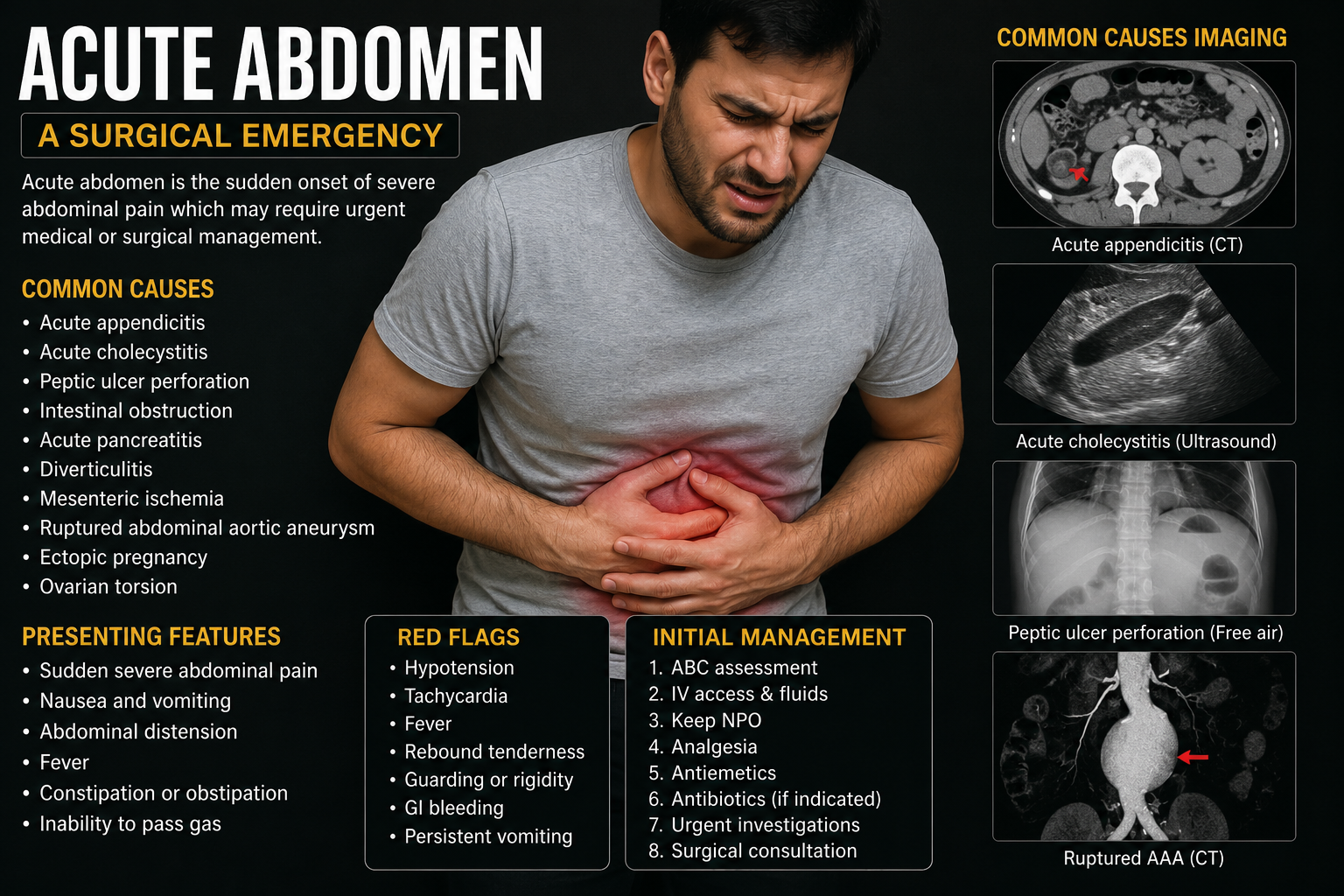
ACUTE ABDOMEN: A HIGH-YIELD REVIEW FOR MEDICAL LICENSING EXAMS
Introduction
Welcome to today's episode. Acute abdomen is one of the most important clinical presentations encountered in family medicine, emergency medicine, general surgery, and internal medicine. It is also one of the highest-yield topics for medical licensing examinations, including the MCCQE1, Therapeutic Decision-Making (TDM) Exam, CCFP, USMLE, PLAB, AMC, MRCP, and SMLE.
Although many causes of abdominal pain are benign, some conditions require immediate diagnosis and surgical intervention. Early recognition and prompt management can save lives.
Definition
An acute abdomen is the sudden onset of severe abdominal pain that may require urgent medical or surgical evaluation. The priority is to identify life-threatening conditions while providing prompt stabilization and symptom relief.
Common Causes
Surgical Causes
- Acute appendicitis
- Acute cholecystitis
- Small bowel obstruction
- Perforated peptic ulcer
- Diverticulitis with perforation
- Mesenteric ischemia
- Strangulated hernia
- Ruptured abdominal aortic aneurysm (AAA)
- Ectopic pregnancy
- Ovarian torsion
- Testicular torsion (referred pain)
Medical Causes
- Acute pancreatitis
- Renal colic
- Pyelonephritis
- Gastroenteritis
- Diabetic ketoacidosis
- Myocardial infarction
- Lower lobe pneumonia
Risk Factors
- Older age
- Previous abdominal surgery
- Gallstones
- Alcohol misuse
- Smoking
- Atrial fibrillation (risk of mesenteric ischemia)
- Pregnancy
- Cancer
- Immunosuppression
- Diabetes
Clinical Presentation
Patients may present with:
- Sudden severe abdominal pain
- Nausea and vomiting
- Fever
- Abdominal distension
- Constipation or obstipation
- Diarrhea
- Gastrointestinal bleeding
- Syncope
- Shoulder-tip pain
- Back pain
- Inability to pass gas
Pain characteristics are important:
- Sudden onset
- Gradual onset
- Colicky pain
- Constant pain
- Localized pain
- Generalized pain
- Pain radiating to the back or shoulder
SOAP Approach
Subjective
Ask about:
- Onset of pain
- Location
- Radiation
- Severity
- Character
- Associated nausea or vomiting
- Fever
- Bowel habits
- Urinary symptoms
- Vaginal bleeding or pregnancy
- Previous surgery
- Alcohol intake
- Medications
- Anticoagulants
- History of gallstones
- Previous similar episodes
Objective
Vital Signs
- Temperature
- Heart rate
- Blood pressure
- Respiratory rate
- Oxygen saturation
Physical Examination
Inspect
- Distension
- Surgical scars
- Hernias
Auscultate
- Bowel sounds
Palpate
- Tenderness
- Guarding
- Rebound tenderness
- Masses
- Murphy sign
- McBurney point tenderness
Percussion
- Tympany
- Peritonitis
Rectal examination when indicated.
Pelvic examination when appropriate.
Investigations
Blood Tests
- CBC
- Electrolytes
- Creatinine
- Liver function tests
- Lipase
- CRP
- Lactate
- Blood cultures if septic
- β-hCG in women of childbearing age
- INR/PTT if anticoagulated
Urine
- Urinalysis
- Urine culture when indicated
ECG
Obtain in older patients or when cardiac ischemia is possible.
Imaging
Ultrasound
Best for:
- Gallbladder disease
- AAA
- Gynecological pathology
CT Abdomen/Pelvis with Contrast
Preferred imaging for most undifferentiated acute abdominal pain in stable adults.
Abdominal X-ray
Limited indications:
- Suspected bowel obstruction
- Perforation (free air)
Assessment
Determine:
- Stable or unstable?
- Medical or surgical abdomen?
- Localized or generalized peritonitis?
- Septic?
- Need for immediate surgery?
Initial Emergency Management
Step 1: ABC Assessment
- Airway
- Breathing
- Circulation
Provide oxygen if hypoxic.
Step 2: Intravenous Access
Insert two large-bore IV cannulas.
Monitor:
- Blood pressure
- Heart rate
- Urine output
Step 3: Fluid Resuscitation
Normal Saline
500–1000 mL IV bolus.
Repeat as needed.
OR
Lactated Ringer's
500–1000 mL IV bolus.
Continue according to clinical response.
Step 4: Pain Control
Pain should not be withheld while awaiting diagnosis.
Acetaminophen
- 1000 mg PO or IV every 6 hours
- Maximum 4 g/day
Ketorolac
- 15–30 mg IV once
Avoid in:
- Renal impairment
- Active GI bleeding
- Advanced age when inappropriate
Morphine
- 2.5–5 mg IV
- Repeat every 5–10 minutes until pain controlled
Hydromorphone
- 0.2–0.5 mg IV
- Repeat as clinically required
Step 5: Antiemetics
Ondansetron
- 4–8 mg IV or PO
OR
Metoclopramide
- 10 mg IV
Step 6: Antibiotics
If intra-abdominal infection is suspected:
Ceftriaxone
- 2 g IV once daily
PLUS
Metronidazole
- 500 mg IV every 8 hours
OR
Piperacillin–Tazobactam
- 4.5 g IV every 6–8 hours
Administer antibiotics as early as possible in patients with sepsis or suspected perforation.
Step 7: Keep the Patient NPO
No oral intake if surgical intervention may be required.
Step 8: Nasogastric Tube
Consider if:
- Persistent vomiting
- Bowel obstruction
- Gastric outlet obstruction
Family Medicine Office Management
Immediate referral to the Emergency Department if the patient has:
- Severe abdominal pain
- Peritoneal signs
- Hemodynamic instability
- GI bleeding
- Persistent vomiting
- Suspected appendicitis
- Suspected cholecystitis
- Suspected bowel obstruction
- Suspected AAA
- Suspected ectopic pregnancy
- Fever with severe abdominal pain
Patients with mild, non-specific abdominal pain and no red flags may be managed conservatively with close follow-up and reassessment within 24–48 hours if appropriate.
Red Flags
- Hypotension
- Shock
- Rigid abdomen
- Rebound tenderness
- Guarding
- Severe sudden pain
- Pulsatile abdominal mass
- Persistent vomiting
- Hematemesis
- Melena
- Bright red rectal bleeding
- Pregnancy with abdominal pain
- Syncope
- High fever with peritonitis
Complications
- Septic shock
- Perforation
- Peritonitis
- Bowel ischemia
- Multi-organ failure
- Death
Exam Pearls
- Pain out of proportion to examination suggests mesenteric ischemia.
- Elderly patient with abdominal pain and hypotension: always consider ruptured AAA.
- Every woman of childbearing age with abdominal pain requires a pregnancy test.
- Normal laboratory results do not exclude appendicitis.
- Early analgesia is appropriate and does not mask important clinical findings.
- CT abdomen/pelvis is the preferred imaging modality for most stable adults with undifferentiated acute abdominal pain.
Take-Home Message
Think systematically:
Assess ABCs → Identify red flags → Establish IV access → Administer fluids, analgesia, and antiemetics → Obtain appropriate investigations → Start antibiotics when indicated → Refer early for surgical assessment if an acute surgical abdomen is suspected.
This content is for educational purposes only and does not constitute medical advice or clinical guidance. Read the full disclaimer.