Case 03
Low Back Pain
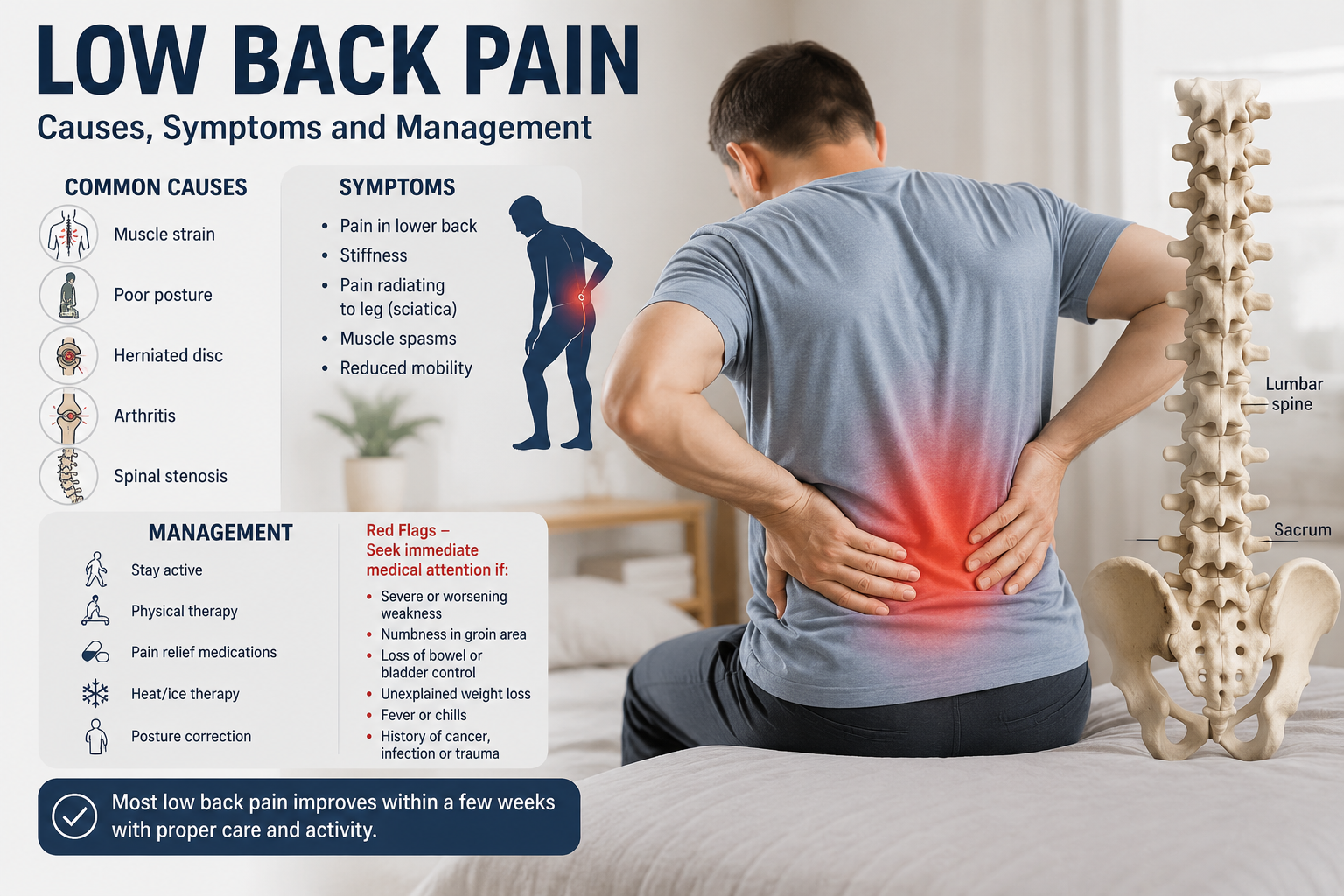
LOW BACK PAIN: A HIGH-YIELD REVIEW FOR MEDICAL LICENSING EXAMS
Introduction
Welcome to today's episode. Low back pain is one of the most common reasons patients visit family physicians, emergency departments, physiotherapists, and spine clinics. It is also one of the highest-yield topics in Canadian licensing examinations, including the MCCQE1, CCFP, Therapeutic Decision-Making (TDM) Exam, as well as USMLE, PLAB, AMC, and other international medical examinations.
Most cases are benign and self-limiting, but every clinician must recognize the small percentage of patients with serious spinal pathology requiring urgent investigation and management.
Definition
Low back pain is pain localized between the lower rib margin and the gluteal folds, with or without radiation into one or both lower extremities.
It is classified as:
- Acute: Less than 6 weeks
- Subacute: 6–12 weeks
- Chronic: More than 12 weeks
Common Causes
Mechanical (Most Common)
- Lumbar muscle strain
- Ligament sprain
- Degenerative disc disease
- Facet joint arthropathy
- Lumbar spinal stenosis
- Herniated lumbar disc
- Spondylolisthesis
Inflammatory
- Ankylosing spondylitis
- Axial spondyloarthritis
Infectious
- Vertebral osteomyelitis
- Discitis
- Spinal epidural abscess
Malignancy
- Metastatic cancer
- Multiple myeloma
- Primary spinal tumors
Other
- Osteoporotic compression fracture
- Abdominal aortic aneurysm
- Renal colic
- Pyelonephritis
- Pancreatitis
Risk Factors
- Older age
- Heavy lifting
- Obesity
- Smoking
- Sedentary lifestyle
- Previous back injury
- Osteoporosis
- Cancer history
- Intravenous drug use
- Immunosuppression
Clinical Presentation
Patients may complain of:
- Lumbar pain
- Buttock pain
- Leg pain (sciatica)
- Morning stiffness
- Muscle spasm
- Difficulty walking
- Numbness
- Weakness
- Tingling
SOAP Approach
Subjective
Ask about:
- Onset
- Mechanism of injury
- Pain location
- Radiation below the knee
- Weakness
- Numbness
- Saddle anesthesia
- Fever
- Weight loss
- Night pain
- History of cancer
- Trauma
- Steroid use
- IV drug use
- Bladder or bowel dysfunction
Objective
General
- Vital signs
- Gait
- Ability to stand
Examination
- Inspection
- Range of motion
- Palpation
- Straight leg raise
- Crossed straight leg raise
- Lower limb power
- Reflexes
- Sensation
- Anal tone if cauda equina suspected
Investigations
No Routine Imaging
Patients with uncomplicated acute mechanical low back pain usually do not require imaging.
Imaging if Red Flags Present
- Lumbar X-ray
- MRI lumbar spine (preferred for neurological deficits, infection, malignancy, or cauda equina syndrome)
- CT if MRI unavailable
Laboratory Tests
- CBC
- ESR
- CRP
- Blood cultures if infection suspected
- Calcium
- Creatinine
- PSA or myeloma workup when indicated
Assessment
Determine:
- Mechanical or non-mechanical pain?
- Radiculopathy present?
- Serious pathology?
- Neurological deficit?
- Red flags?
Management (Canadian Family Medicine)
Reassure the Patient
Most acute mechanical low back pain improves within 4–6 weeks.
Encourage patients to remain active.
Avoid prolonged bed rest.
Non-Pharmacological Management
- Continue normal activities as tolerated
- Physiotherapy
- Home exercise program
- Walking
- Weight reduction
- Smoking cessation
- Heat therapy
- Ergonomic advice
Medications
Acetaminophen
- 500–1000 mg every 6 hours as needed
- Maximum 4 g/day (lower in selected patients)
NSAIDs (First-line if no contraindications)
Ibuprofen
- 400–600 mg every 6–8 hours
Naproxen
- 250–500 mg twice daily
Use the lowest effective dose for the shortest duration.
Muscle Relaxants
Short-term use may be considered in selected patients with severe muscle spasm.
Opioids
Avoid routine use.
Reserve only for severe acute pain when other treatments have failed and use for the shortest possible duration.
When to Refer
Urgent referral:
- Cauda equina syndrome
- Progressive neurological deficit
- Suspected spinal infection
- Suspected malignancy
- Vertebral fracture
Routine referral:
- Persistent pain >6 weeks despite treatment
- Significant radiculopathy
- Surgical assessment when indicated
Red Flags
Immediate investigation is required for:
- Age >50 with new severe pain
- History of cancer
- Unexplained weight loss
- Fever
- Night pain
- Immunosuppression
- IV drug use
- Major trauma
- Osteoporosis
- Progressive weakness
- Saddle anesthesia
- Urinary retention
- Fecal incontinence
- Bilateral sciatica
Complications
- Chronic pain
- Disability
- Persistent radiculopathy
- Cauda equina syndrome
- Permanent neurological deficit
Exam Pearls
- Mechanical low back pain is the most common diagnosis.
- Imaging is not routinely indicated for uncomplicated acute low back pain.
- Always screen for red flags before reassuring the patient.
- MRI is the investigation of choice when serious spinal pathology is suspected.
- Cauda equina syndrome is a surgical emergency.
Take-Home Message
Think systematically:
History → Screen for Red Flags → Focused Neurological Examination → Avoid unnecessary imaging → Encourage activity → Provide adequate pain control → Refer urgently if serious pathology is suspected.
This content is for educational purposes only and does not constitute medical advice or clinical guidance. Read the full disclaimer.