Mastering Cough in Primary Care
A Step-by-Step Approach: Assessment, Diagnosis and Management
TopMedCast podcast script | Adult primary care
Introduction
Welcome to TopMedCast. A cough consultation works best when we follow a consistent sequence: assess safety, take a focused history, examine the patient, identify warning signs, investigate selectively and treat the cause. Today we will apply this approach to acute, postinfectious and chronic cough in adults.
Step 1. Initial assessment: is the patient safe?
Check respiratory rate, oxygen saturation, temperature, pulse and blood pressure. Assess work of breathing and mental status.
Marked respiratory distress, significant hypoxaemia, confusion or haemodynamic instability calls for emergency assessment. Consider severe pneumonia or another acute cardiopulmonary emergency rather than simply “bronchitis.” Older or immunocompromised patients may have serious infection without an impressive fever.
Step 2. History: establish duration and clinical clues
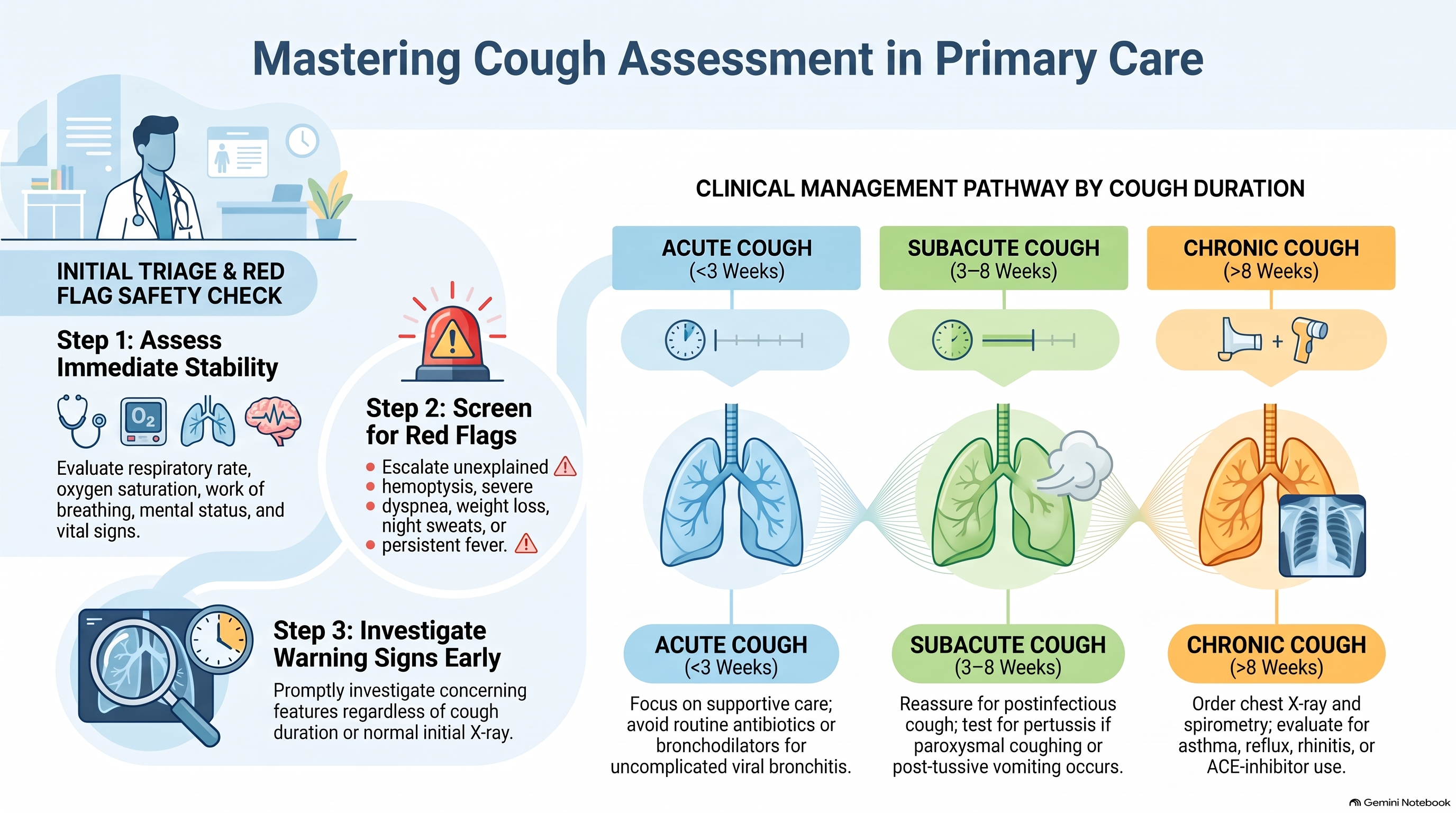
In adults, acute cough lasts less than three weeks, subacute cough lasts three to eight weeks and chronic cough lasts more than eight weeks. These categories organise the assessment; they do not replace clinical judgment. A concerning cough needs investigation regardless of how recently it started.
Ask whether the cough began suddenly or gradually, followed an infection, is improving or worsening, and is dry or productive. Ask about sputum, blood, coughing fits and vomiting after coughing.
Explore fever, breathlessness, wheeze, chest pain, weight loss and night sweats. Ask about night-time symptoms, exercise, allergens, meals, lying down and swallowing. Nasal blockage or discharge, heartburn and regurgitation can guide targeted assessment.
Review smoking, vaping, occupational exposures, respiratory contacts, previous lung disease and every medication, especially ACE inhibitors. Ask about recurrent infections and relevant tuberculosis exposure. Assess sleep, daily function and the patient's main concern.
Step 3. Examination: assess severity and look for a cause
Check vital signs, including respiratory rate and oxygen saturation. Observe work of breathing, ability to speak and general appearance. Examine the chest for wheeze, focal crackles, reduced air entry or persistent inspiratory crackles. Examine the nose and throat when upper airway symptoms are present.
Look for clubbing, lymphadenopathy and signs of fluid overload when clinically indicated. A normal chest examination does not exclude asthma or all serious causes of cough.
Step 4. Red flags: identify who needs escalation
Severe breathlessness, significant hypoxaemia, confusion, instability or substantial haemoptysis requires emergency assessment.
Unexplained blood in sputum, weight loss, persistent fever or night sweats, recurrent pneumonia, progressive symptoms or abnormal examination findings require prompt investigation. Do not wait for the cough to reach eight weeks when warning signs are present.
Investigate unexplained haemoptysis, weight loss, appetite loss, persistent chest pain, recurrent chest infections or a new or changing cough in someone at increased cancer risk.
Arrange prompt imaging and referral through the local pathway. A normal chest X-ray does not end the assessment when clinical concern remains; further imaging may be needed. Lung cancer can also occur in people who have never smoked.
Step 5. Investigations: match testing to the presentation
An uncomplicated acute cough in an otherwise well adult often needs no routine imaging or blood tests. Suspected pneumonia, abnormal physiology or other concerning findings change that plan.
For cough lasting more than eight weeks, take a structured history and obtain a chest X-ray and diagnostic spirometry. A full blood count, blood eosinophils and exhaled nitric oxide, where available, can inform assessment.
Ask about smoking, vaping, occupational exposures, medicines, nasal symptoms, wheeze, reflux, sputum and swallowing difficulties. Assess sleep disruption and the impact on daily life.
Chest CT is not a routine first test for every patient with a normal examination and chest X-ray. Use it selectively when findings, risk factors or persistent unexplained symptoms justify further investigation.
Use targeted infection testing when exposure, symptoms or public health considerations justify it. Productive cough with recurrent infections may warrant sputum studies and assessment for bronchiectasis.
Step 6. Diagnosis: recognise the likely pattern
Acute viral cough or bronchitis
Most uncomplicated acute cough associated with a cold or acute bronchitis is self-limiting. It can take three to four weeks to settle. Explain this early so persistence for several days is not mistaken for treatment failure.
Supportive care includes fluids, avoiding smoke and simple symptom relief. Honey may offer some benefit; evidence for many cough products is limited. Antibiotics are not routinely indicated for uncomplicated acute bronchitis, and coloured sputum alone is not a reason to prescribe them.
Do not routinely prescribe bronchodilators or corticosteroids unless there is an underlying airway indication. A patient who is systemically very unwell, at increased risk of complications or has suspected pneumonia needs a different assessment and treatment plan.
Pneumonia
Fever, breathlessness, pleuritic pain, tachypnoea, hypoxaemia and focal chest findings increase concern. Assess severity alongside comorbidities, frailty and the ability to manage at home. A severity score supports judgment; it does not override concerning physiology.
Arrange chest imaging when indicated and accessible. Suspected pneumonia requires prompt treatment using local antimicrobial guidance. Severe illness needs hospital care, and investigation should not create an unsafe treatment delay.
Postinfectious cough
Picture an otherwise well adult whose fever and nasal symptoms resolved, but who is still coughing at five weeks. Postinfectious cough is possible when examination is reassuring and other explanations have been considered.
It commonly resolves spontaneously. Routine inhaled steroids, bronchodilators and oral medicines have not demonstrated clear benefit for uncomplicated postinfectious cough. Reassurance should include follow-up: return earlier for new warning symptoms, and reassess if the cough persists beyond eight weeks. Do not keep calling a worsening cough “postviral.”
Pertussis
Repeated coughing fits, vomiting after coughing, an inspiratory whoop or a relevant exposure should raise suspicion. Adults may not have the classic whoop.
Arrange appropriate testing and follow local public health advice. Early antibiotics can reduce illness severity; treatment during the infectious period also helps reduce transmission, although an established cough may continue. Pay particular attention to contact with infants and pregnant people. Contact prophylaxis and exclusion advice should follow local public health recommendations.
Asthma and eosinophilic airway disease
Night-time or variable cough triggered by exercise, cold air or allergens may suggest asthma. Wheezing may be absent in cough-variant asthma, and normal initial spirometry does not fully exclude it.
Seek objective evidence of variable airflow limitation; repeat testing or specialist bronchial challenge may be needed. Confirmed asthma needs an inhaled corticosteroid-containing approach, with inhaler teaching and follow-up.
Eosinophilic bronchitis can cause cough with normal spirometry and without the airway hyperresponsiveness of asthma. It may also respond to inhaled corticosteroids. Avoid labelling every persistent cough as asthma or continuing ineffective inhalers indefinitely.
Rhinitis and reflux
Nasal blockage, sneezing or discharge may point to rhinitis or rhinosinusitis. A targeted trial of intranasal corticosteroid and saline may be appropriate. Throat clearing alone does not prove an upper airway cause.
For reflux, ask about heartburn and regurgitation. Address relevant habits, including late meals, and treat symptomatic reflux when indicated. Routine proton pump inhibitors for unexplained cough without typical reflux symptoms or evidence of acid reflux are unlikely to help.
Medication-related cough
An ACE inhibitor such as ramipril or lisinopril can cause dry cough, even when treatment began well before the symptoms. Consider a clinician-supervised switch to a suitable alternative and allow time for improvement.
Medication review can save a patient repeated antibiotics and unnecessary inhalers. Do not dismiss this possibility simply because the patient has taken the medicine for years.
COPD and bronchiectasis
Persistent sputum, smoking or occupational exposure should prompt assessment for COPD. Confirm the diagnosis with spirometry rather than symptoms alone. Smoking cessation and appropriate airway treatment matter more than repeatedly suppressing the cough.
Daily sputum, recurrent infections or haemoptysis may also suggest bronchiectasis. Persistent productive cough needs its own investigation pathway; targeted sputum testing and CT may be appropriate when clinically indicated.
Step 7. Management: agree on a targeted plan
Explain the likely cause and expected course. Choose treatment for the identified problem, rather than prescribing antibiotics, inhalers and reflux medication together without a clear reason.
For uncomplicated viral or postinfectious cough, focus on supportive care, explanation and follow-up. Treat pneumonia promptly when suspected, using local guidance. For asthma or COPD, confirm the diagnosis where possible, review inhaler technique and provide condition-specific care.
Treat rhinitis or symptomatic reflux when the history supports it. Review a possible ACE inhibitor cause with the patient and arrange a suitable alternative when appropriate. Support smoking cessation and avoidance of irritants.
If using an empirical treatment trial, define its duration and what counts as success. Stop ineffective treatment and reconsider the cause.
Step 8. Referral and follow-up
Reassess the diagnosis, adherence and exposures. More than one contributor may be present. Stop ineffective empirical treatments rather than adding them indefinitely.
Persistent cough despite appropriate investigation and treatment warrants referral. Some patients have cough hypersensitivity, with coughing triggered by talking, scents or cold air. Specialist care may include cough-control therapy. Recognising this should follow assessment for treatable disease.
Refer urgently when imaging or symptoms suggest serious disease. Respiratory assessment can help with unexplained chronic cough, suspected bronchiectasis or persistent symptoms despite appropriate care.
Set a review date. Reassess sooner for worsening symptoms, and investigate a cough that persists beyond eight weeks rather than repeatedly assuming it is postviral.
Give clear safety-net advice: seek emergency care for severe breathlessness, substantial bleeding, confusion or collapse. Arrange prompt reassessment for any blood in sputum, persistent fever, chest pain, weight loss or deterioration.
Closing
A good cough consultation follows a clear order: assess safety, understand the history, examine carefully, recognise red flags, investigate appropriately, treat the cause and arrange follow-up.
This is TopMedCast. Thank you for listening to Mastering Cough in Primary Care.
This content is for educational purposes only and does not constitute medical advice or clinical guidance. Read the full disclaimer.