Case 05
Contraception
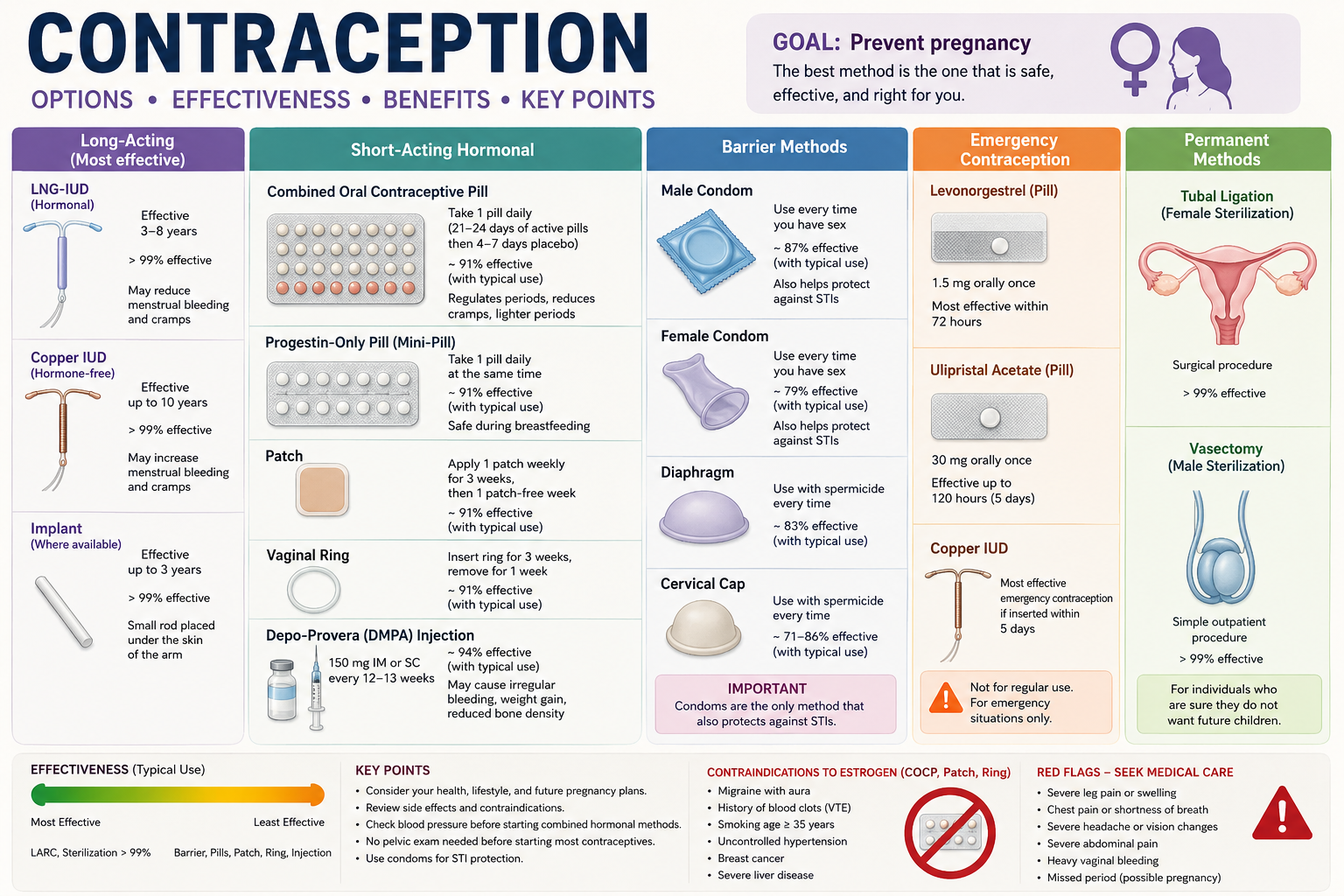
CONTRACEPTION: A HIGH-YIELD REVIEW FOR MEDICAL LICENSING EXAMS
Introduction
Welcome to today's episode. Contraception is one of the most frequently encountered topics in family medicine, women's health, primary care, and medical licensing examinations, including the MCCQE1, CCFP, Therapeutic Decision-Making (TDM) Exam, USMLE, PLAB, AMC, and SMLE.
Choosing the right contraceptive method requires balancing effectiveness, patient preferences, medical eligibility, contraindications, and reproductive goals. In this episode, we'll review the practical, evidence-based approach to contraception according to current Canadian practice.
Definition
Contraception refers to methods used to prevent pregnancy. Modern contraceptive methods are highly effective when used correctly and may provide additional non-contraceptive health benefits.
Types of Contraception
Long-Acting Reversible Contraception (LARC)
- Levonorgestrel intrauterine system (LNG-IUD)
- Copper intrauterine device (Copper IUD)
- Etonogestrel implant (where available)
Short-Acting Hormonal Methods
- Combined oral contraceptive pill (COCP)
- Progestin-only pill (POP)
- Transdermal patch
- Vaginal ring
- Depot medroxyprogesterone acetate (DMPA)
Barrier Methods
- Male condom
- Female condom
- Diaphragm
- Cervical cap
Permanent Methods
- Tubal ligation
- Vasectomy
Emergency Contraception
- Levonorgestrel
- Ulipristal acetate
- Copper IUD
Choosing the Right Method
Consider:
- Age
- Pregnancy intention
- Breastfeeding
- Smoking status
- Migraine history
- Hypertension
- Diabetes
- BMI
- History of venous thromboembolism
- Liver disease
- Patient preference
- STI risk
SOAP Approach
Subjective
Ask about:
- Last menstrual period
- Pregnancy risk
- Sexual history
- Previous contraception
- Side effects
- Smoking
- Migraine with aura
- Hypertension
- VTE history
- Breastfeeding
- Medications
- Desire for future fertility
Objective
- Blood pressure
- Weight/BMI
- Pregnancy test if indicated
- STI screening when appropriate
Routine pelvic examination is not required before initiating most contraceptive methods.
Investigations
When indicated:
- Pregnancy test
- STI screening
- Cervical cancer screening according to guidelines
- Blood pressure before combined hormonal contraception
Management in Family Medicine
Combined Oral Contraceptive Pill (COCP)
Examples:
- Ethinyl estradiol + levonorgestrel
- Ethinyl estradiol + drospirenone
Typical dose:
- One tablet daily for 21–24 days, depending on formulation, followed by placebo or hormone-free interval.
Benefits:
- Highly effective
- Improves dysmenorrhea
- Reduces menstrual bleeding
- Improves acne
- Reduces ovarian and endometrial cancer risk
Avoid in:
- Migraine with aura
- Previous VTE
- Smoking age ≥35 years
- Uncontrolled hypertension
- Breast cancer
- Severe liver disease
Progestin-Only Pill
Example:
- Norethindrone 0.35 mg daily
Take at the same time every day.
Preferred during breastfeeding and when estrogen is contraindicated.
Depot Medroxyprogesterone (DMPA)
- 150 mg IM every 12–13 weeks
Advantages:
- Highly effective
- Suitable for many women who cannot use estrogen
Disadvantages:
- Weight gain
- Irregular bleeding
- Delayed return to fertility
- Bone mineral density loss with prolonged use
Levonorgestrel IUD
Examples:
- Mirena®
- Kyleena®
Effective for 5–8 years, depending on the product.
Benefits:
99% effective
- Reduces menstrual bleeding
- Long-term contraception
Copper IUD
- Hormone-free
- Effective for up to 10 years
- Can also be used as emergency contraception if inserted within 5 days of unprotected intercourse
Emergency Contraception
Levonorgestrel
- 1.5 mg orally once
- Most effective within 72 hours
Ulipristal Acetate
- 30 mg orally once
- Effective up to 120 hours (5 days)
Copper IUD
Most effective emergency contraception if inserted within 5 days.
Follow-Up
Review:
- Side effects
- Blood pressure if using combined hormonal contraception
- Adherence
- Bleeding pattern
- Patient satisfaction
No routine follow-up is required for asymptomatic IUD users after successful insertion unless concerns arise.
Red Flags
Urgent assessment if:
- Severe abdominal pain
- Chest pain
- Shortness of breath
- Severe headache
- Vision changes
- Unilateral leg swelling
- Heavy vaginal bleeding
- Suspected pregnancy with IUD in place
Complications
- Venous thromboembolism
- Irregular bleeding
- Method failure
- Ectopic pregnancy (if pregnancy occurs with an IUD)
- Pelvic infection shortly after IUD insertion (rare)
Exam Pearls
- Long-acting reversible contraception (LARC) is the most effective reversible contraception.
- Combined hormonal contraception is contraindicated in migraine with aura.
- Smoking and age ≥35 years significantly increase the risk of estrogen-containing contraception.
- Copper IUD is the most effective form of emergency contraception.
- Blood pressure should be checked before starting combined hormonal contraception.
- Routine pelvic examination is not required before prescribing oral contraceptives.
Take-Home Message
Think systematically:
Assess pregnancy risk → Review medical eligibility → Discuss contraceptive options → Consider contraindications → Provide shared decision-making → Arrange appropriate follow-up.
This content is for educational purposes only and does not constitute medical advice or clinical guidance. Read the full disclaimer.