Case 06
Herpes Zoster, Hidradenitis Suppurativa, and Impetigo
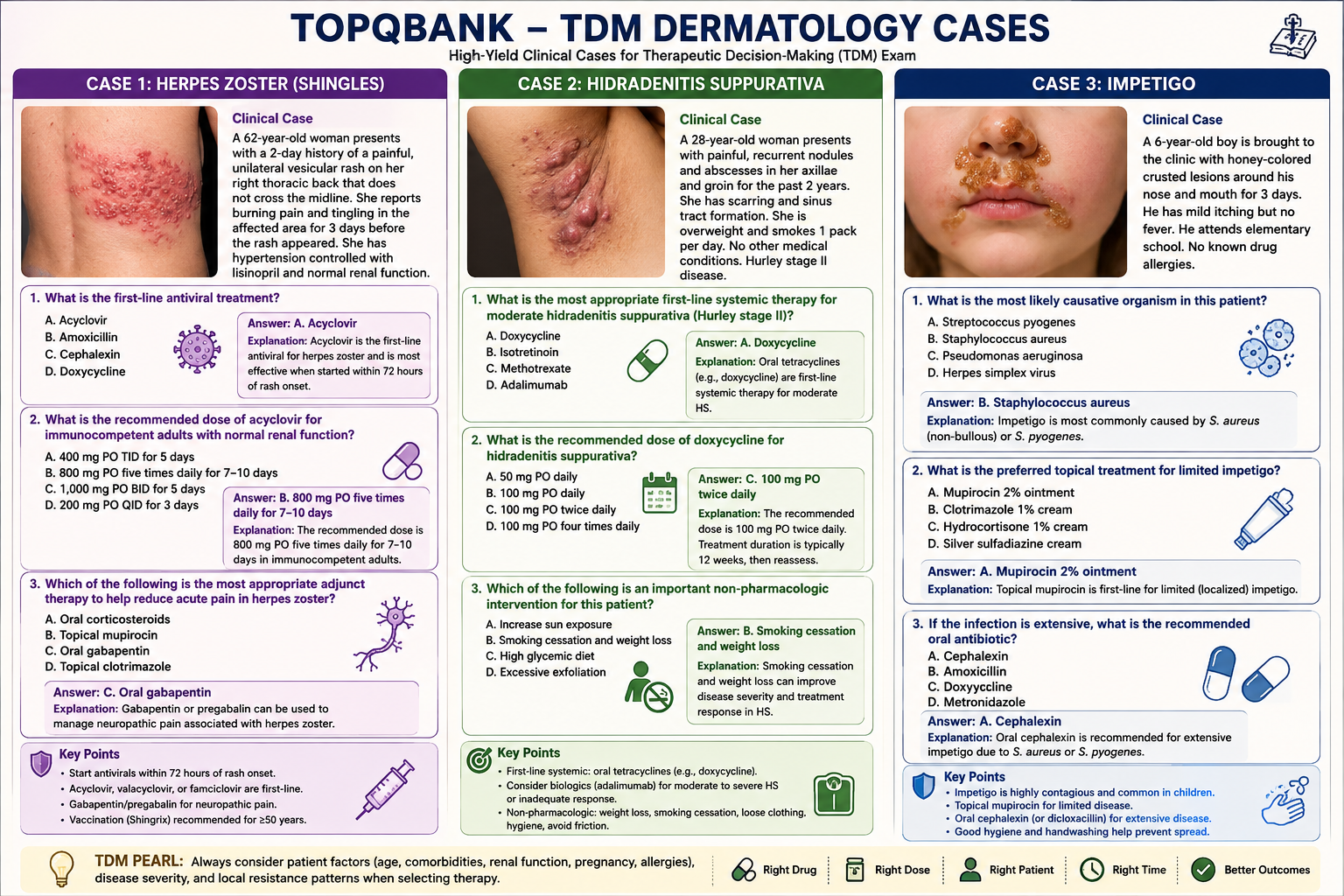
TopQBank Dermatology TDM Cases
Herpes Zoster
Clinical Case
A 67 year old woman presents with a painful blistering rash over the right chest for 4 days. She describes burning pain followed by grouped vesicles. PMHx type 2 diabetes and hypertension. Vitals normal. Exam shows unilateral vesicular lesions on an erythematous base in a thoracic dermatomal distribution not crossing the midline. Diagnosis herpes zoster suspected.
What is the MOST appropriate initial treatment
- A. Valacyclovir
- B. Cephalexin
- C. Fluconazole
- D. Topical corticosteroid
- E. Observation
Answer: A. Valacyclovir
Explanation: Antiviral therapy started early reduces symptom duration and complications
Which management steps are appropriate
- A. Start antiviral therapy
- B. Provide pain control
- C. Assess eye involvement
- D. Assess immunocompromised status
- E. Counsel lesion hygiene
- F. Monitor for postherpetic neuralgia
- G. Consider shingles vaccination later
- H. Start antibiotics routinely
- I. Review medication interactions
- J. Educate transmission precautions
- K. Follow clinical response
- L. Ignore pain severity
Answer: A. Start antiviral therapy; B. Provide pain control; C. Assess eye involvement; D. Assess immunocompromised status; E. Counsel lesion hygiene; F. Monitor for postherpetic neuralgia; G. Consider shingles vaccination later; I. Review medication interactions; J. Educate transmission precautions; K. Follow clinical response
Explanation: Management includes antiviral treatment pain management and complication prevention
Which valacyclovir regimen is MOST appropriate
- A. Valacyclovir 1000 mg PO TID for 7 days
- B. Valacyclovir once weekly
- C. Single dose valacyclovir
- D. Topical valacyclovir only
- E. No antiviral therapy
Answer: A. Valacyclovir 1000 mg PO TID for 7 days
Explanation: Standard antiviral therapy reduces viral replication and symptom duration
Which adverse effects should be discussed with valacyclovir
- A. Headache
- B. Nausea
- C. Abdominal pain
- D. Dizziness
- E. Renal toxicity
- F. Hypoglycemia
- G. Bradycardia
- H. Hyperkalemia
- I. Rash
- J. Vomiting
Answer: A. Headache; B. Nausea; C. Abdominal pain; D. Dizziness; E. Renal toxicity; I. Rash; J. Vomiting
Explanation: Patients should be counseled regarding common gastrointestinal and renal adverse effects
What patient counseling is MOST appropriate
- A. Stop medication when pain improves
- B. Complete antiviral therapy and seek urgent care for eye symptoms
- C. No follow up required
- D. Lesions are never contagious
- E. Vaccination is unnecessary
Answer: B. Complete antiviral therapy and seek urgent care for eye symptoms
Explanation: Ophthalmic involvement may threaten vision and requires urgent assessment
Hidradenitis Suppurativa
Clinical Case
A 34 year old woman presents with recurrent painful nodules and draining lesions in both axillae for 3 years. She reports frequent flares with scarring and malodorous discharge. She smokes one pack daily and has obesity. Vitals normal. Examination shows multiple inflamed nodules sinus tracts and scarring in the axillae. Diagnosis hidradenitis suppurativa confirmed.
What is the MOST appropriate initial treatment for mild to moderate disease
- A. Topical clindamycin
- B. Oral antifungal
- C. Topical corticosteroid only
- D. Observation
- E. Antiviral therapy
Answer: A. Topical clindamycin
Explanation: Topical clindamycin is a first line treatment for mild hidradenitis suppurativa
Which management steps are appropriate
- A. Encourage smoking cessation
- B. Recommend weight reduction
- C. Use topical clindamycin
- D. Assess disease severity
- E. Provide pain management
- F. Consider oral doxycycline for persistent disease
- G. Educate skin care
- H. Start antibiotics indefinitely
- I. Monitor quality of life
- J. Dermatology referral
- K. Assess depression symptoms
- L. Ignore scarring
Answer: A. Encourage smoking cessation; B. Recommend weight reduction; C. Use topical clindamycin; D. Assess disease severity; E. Provide pain management; F. Consider oral doxycycline for persistent disease; G. Educate skin care; I. Monitor quality of life; J. Dermatology referral; K. Assess depression symptoms
Explanation: Management includes lifestyle modification symptom control and escalation based on severity
Which treatment is MOST appropriate if disease remains active despite topical therapy
- A. Oral doxycycline
- B. Antifungal cream
- C. Observation
- D. Antiviral therapy
- E. No escalation
Answer: A. Oral doxycycline
Explanation: Oral tetracycline therapy is commonly used for persistent inflammatory disease
Which adverse effects should be discussed with doxycycline
- A. Photosensitivity
- B. Esophagitis
- C. Gastrointestinal upset
- D. Rash
- E. Nausea
- F. Hypoglycemia
- G. Bradycardia
- H. Hyperkalemia
- I. Vomiting
- J. Dizziness
Answer: A. Photosensitivity; B. Esophagitis; C. Gastrointestinal upset; D. Rash; E. Nausea; I. Vomiting; J. Dizziness
Explanation: Patients should receive counseling on sun exposure and proper medication administration
What patient counseling is MOST appropriate
- A. Smoking has no effect on disease
- B. Smoking cessation and weight reduction may improve disease control
- C. Stop treatment when one lesion improves
- D. No follow up required
- E. Surgery is always first line
Answer: B. Smoking cessation and weight reduction may improve disease control
Explanation: Lifestyle modification is an important component of long term management
Impetigo
Clinical Case
A 7 year old boy is brought to clinic with a 5 day history of itchy crusted lesions around the nose and mouth. Several classmates have similar skin infections. He is otherwise well with no fever. Examination shows multiple honey colored crusted plaques around the nares and upper lip. No abscess or cellulitis is present. Diagnosis nonbullous impetigo confirmed.
What is the MOST appropriate first line treatment for localized impetigo
- A. Topical mupirocin
- B. Oral acyclovir
- C. Topical corticosteroid
- D. Oral antifungal
- E. Observation
Answer: A. Topical mupirocin
Explanation: Localized nonbullous impetigo is effectively treated with topical mupirocin
Which management steps are appropriate
- A. Use topical mupirocin
- B. Encourage hand hygiene
- C. Avoid sharing towels
- D. Clean crusted lesions gently
- E. Monitor for spread
- F. Exclude from school until treatment started
- G. Educate family contacts
- H. Start antiviral therapy
- I. Assess for cellulitis
- J. Counsel nail trimming
- K. Follow treatment response
- L. Ignore outbreaks
Answer: A. Use topical mupirocin; B. Encourage hand hygiene; C. Avoid sharing towels; D. Clean crusted lesions gently; E. Monitor for spread; F. Exclude from school until treatment started; G. Educate family contacts; I. Assess for cellulitis; J. Counsel nail trimming; K. Follow treatment response
Explanation: Management includes topical therapy infection control and monitoring for complications
Which treatment is MOST appropriate if lesions are extensive or numerous
- A. Oral cephalexin
- B. Oral fluconazole
- C. Topical steroid
- D. Observation
- E. Antiviral therapy
Answer: A. Oral cephalexin
Explanation: Extensive impetigo often requires oral antibiotic therapy
Which adverse effects should be discussed with cephalexin
- A. Diarrhea
- B. Nausea
- C. Rash
- D. Allergic reaction
- E. Clostridioides difficile infection
- F. Hypoglycemia
- G. Bradycardia
- H. Hyperkalemia
- I. Vomiting
- J. Headache
Answer: A. Diarrhea; B. Nausea; C. Rash; D. Allergic reaction; E. Clostridioides difficile infection; I. Vomiting
Explanation: Patients should be counseled regarding gastrointestinal and allergic adverse effects
What patient counseling is MOST appropriate
- A. Continue sharing towels
- B. Complete treatment and maintain good hygiene to prevent spread
- C. Stop treatment when crusting improves slightly
- D. No follow up needed
- E. Scratching prevents infection
Answer: B. Complete treatment and maintain good hygiene to prevent spread
Explanation: Good hygiene and adherence reduce transmission and recurrence
This content is for educational purposes only and does not constitute medical advice or clinical guidance. Read the full disclaimer.