Mastering Anaemia in Primary Care
Welcome to TopMedCast. Before we begin, a quick mention of TopQBank—if you’re preparing for a medical exam or want to sharpen your clinical reasoning, visit TopQBank.com. Now, let’s talk about anaemia in primary care.
A patient presents with fatigue. Another becomes breathless climbing stairs. A third has numb feet and an unsteady gait. Their blood tests show anaemia, but they may need very different investigations and treatments.
Today, we’ll approach adult anaemia in primary care: recognizing emergencies, interpreting the blood count, identifying the cause and starting appropriate treatment.
The central message is simple: anaemia is a finding, not a final diagnosis.
Recognizing Emergencies
Does This Patient Need Emergency Care?
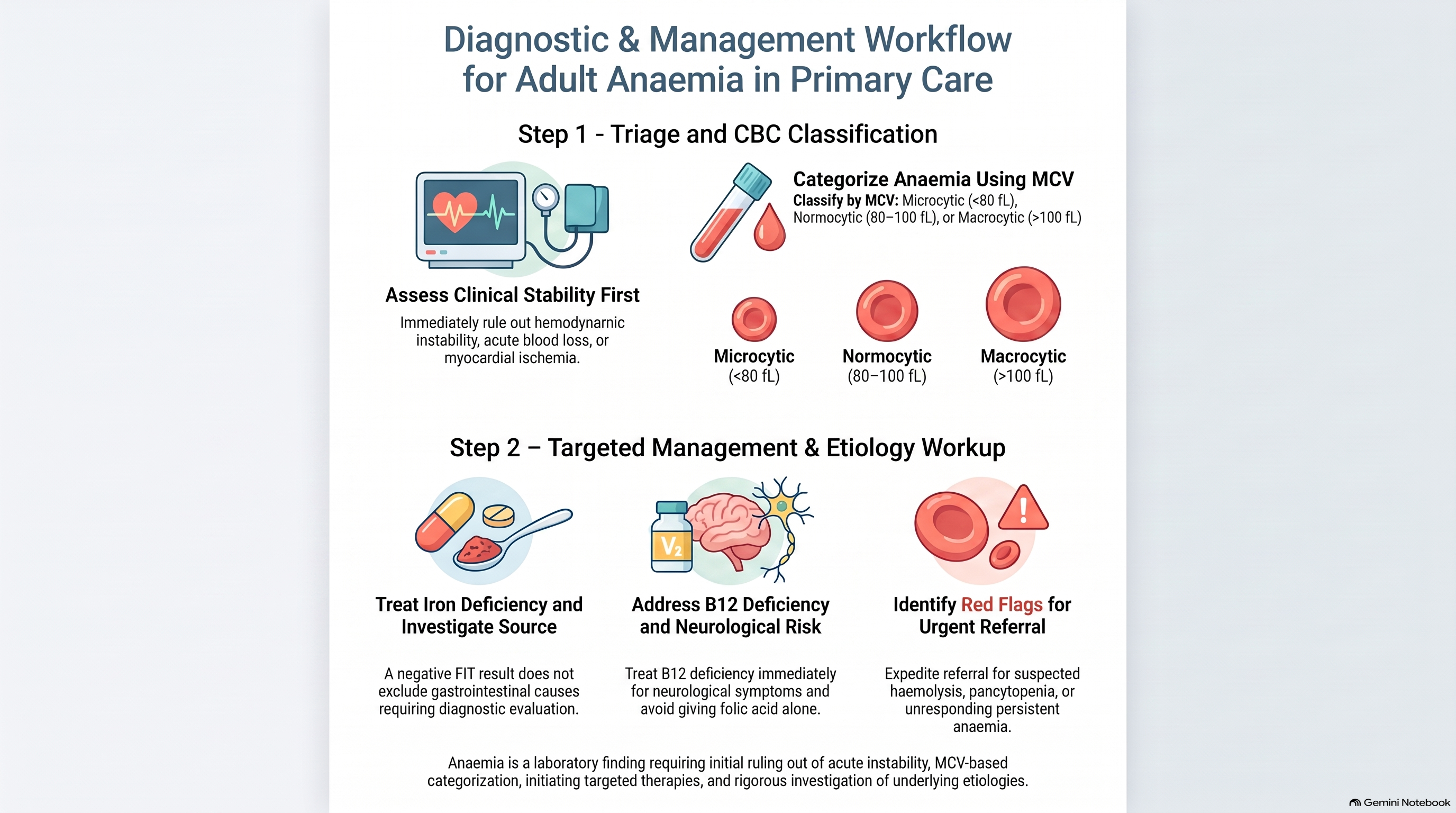
Before investigating the cause, assess clinical stability.
Ask about active bleeding, black stools, vomiting blood, chest pain, breathlessness at rest, fainting and rapidly worsening symptoms. Check vital signs and look for evidence of poor perfusion or heart failure.
A patient with haemodynamic instability, significant ongoing bleeding or symptoms suggesting myocardial ischaemia needs emergency assessment. A reassuring haemoglobin result does not exclude major early acute blood loss.
For stable hospitalized adults, transfusion is often considered below a haemoglobin of 70 grams per litre. This is not an automatic transfusion rule or an outpatient discharge threshold. Symptoms, bleeding, comorbidities and the speed of decline matter. Acute myocardial infarction requires a different, individualized approach.
Stable iron-deficiency anaemia should generally receive iron replacement rather than transfusion when transfusion is not otherwise indicated.
Interpreting the Blood Count
Read the Whole Blood Count
Do not stop at the haemoglobin.
Review the mean corpuscular volume, or MCV, the red-cell distribution width, white-cell count and platelets. Compare with previous results.
Microcytic anaemia generally means an MCV below 80 femtolitres. Think iron deficiency, thalassaemia and sometimes inflammation.
Normocytic anaemia has an MCV around 80 to 100. Consider early iron deficiency, kidney disease, inflammation, blood loss and haemolysis.
Macrocytic anaemia generally has an MCV above 100. Consider vitamin B12 or folate deficiency, alcohol, liver disease, hypothyroidism, medications and marrow disorders.
These categories guide investigation; they do not establish the diagnosis. Mixed deficiencies can produce a normal MCV.
Check an absolute reticulocyte count when the cause is unclear. An appropriately increased response suggests blood loss or red-cell destruction; an inadequate response suggests impaired production. Interpret it against the severity of anaemia and the timing of illness.
Iron-Deficiency Anaemia
Case One: Fatigue and Heavy Menstrual Bleeding
A 36-year-old woman reports fatigue and reduced exercise tolerance. Her periods are prolonged and heavy. Haemoglobin is 96 grams per litre, MCV is 73, and ferritin is 8 micrograms per litre.
This pattern supports iron-deficiency anaemia.
Ask about menstrual loss, diet, blood donation, gastrointestinal symptoms and possible malabsorption. Do not assume that identifying heavy periods completes the assessment.
In otherwise well adults, ferritin below 30 micrograms per litre supports iron deficiency. Iron deficiency can also occur before the haemoglobin falls, and a normal MCV does not exclude it.
Ferritin rises with inflammation. In a patient with chronic inflammatory disease, kidney disease or infection, a normal or elevated ferritin may conceal iron deficiency. Transferrin saturation can help clarify iron availability.
Management has two parts: replace iron and address its cause. For this patient, that includes discussing treatment of heavy menstrual bleeding and considering whether a bleeding disorder or other pathology needs investigation.
Quick Management: Oral and Intravenous Iron
For most stable patients with confirmed iron deficiency, oral iron is the initial treatment.
Use an oral preparation such as ferrous sulphate, fumarate or gluconate, checking the elemental iron content. The tablet’s total weight is not the elemental iron dose.
Once-daily dosing is usually sufficient. Every-other-day dosing may improve tolerance for some patients. Constipation, nausea and abdominal discomfort can affect adherence, so ask about side effects rather than simply increasing the dose.
Consider intravenous iron when oral treatment is not tolerated, iron stores fail to improve despite an adequate trial, or absorption is unlikely to be effective.
Intravenous iron replenishes iron stores; it does not provide the immediate oxygen-carrying support of a blood transfusion.
Check That Treatment Is Working
Arrange a repeat blood count within approximately two to four weeks, adjusted to severity.
A meaningful haemoglobin rise supports a response. If improvement is inadequate, reconsider adherence, ongoing bleeding, malabsorption, the diagnosis and coexisting disease.
Do not stop treatment immediately when haemoglobin normalizes. Continue long enough to replenish iron stores and reassess ferritin according to the clinical context.
The exam lesson is that prescribing iron is only the beginning. Confirm the response and investigate the source.
Case Two: Iron Deficiency in an Older Man
A 68-year-old man has new fatigue. His haemoglobin is 101 grams per litre, MCV is 75, and ferritin is 10. He reports no visible bleeding.
Start iron replacement, but investigate the cause.
Unexplained iron-deficiency anaemia in adult men and postmenopausal women warrants gastrointestinal assessment, commonly including upper and lower endoscopy. Consider coeliac disease and urinary blood loss as well.
A negative FIT does not exclude a gastrointestinal cause and should not prevent indicated referral. This is diagnostic investigation, not routine colorectal screening.
Weight loss, altered bowel habits or overt bleeding increases concern, but the absence of these symptoms does not remove the need to investigate.
Microcytosis Is Not Always Iron Deficiency
Now imagine a patient with longstanding marked microcytosis, mild anaemia and adequate iron stores.
Consider thalassaemia trait, particularly with a relevant family history or ancestry. The red-cell count may be relatively preserved despite the low MCV.
Arrange appropriate haemoglobinopathy testing or specialist advice. Some forms, particularly alpha-thalassaemia trait, may require further evaluation despite unremarkable initial haemoglobin studies.
Avoid prolonged empiric iron treatment without evidence of deficiency.
Vitamin B12 Deficiency
Case Three: Anaemia with Numb Feet
A 72-year-old patient taking metformin reports fatigue, numb feet and impaired balance. Haemoglobin is 104 grams per litre, MCV is 112, and vitamin B12 is low.
Vitamin B12 deficiency is likely, and the neurological symptoms make prompt treatment important.
Ask about diet, gastrointestinal surgery, malabsorption, autoimmune disease and medication exposure. B12 deficiency can cause neurological injury even without anaemia or macrocytosis.
Oral cyanocobalamin, typically 1,000 to 2,000 micrograms daily, is effective for many patients. Significant neurological involvement or severe symptomatic disease generally favours initial intramuscular treatment according to local protocols.
Do not delay treatment in a convincing neurological presentation while awaiting every confirmatory test. Follow clinical and haematological recovery, and investigate the underlying cause.
Avoid folic acid alone when B12 deficiency is possible: it may improve the blood count while neurological injury continues.
Other Causes of Anaemia
Normocytic Anaemia: Look Beyond Nutrition
A normal MCV does not mean a normal diagnostic workup.
Review kidney function, inflammatory disease, medication exposure and evidence of bleeding. Add targeted tests such as ferritin, B12, thyroid testing or liver studies when the history and findings justify them.
Chronic kidney disease can reduce erythropoietin production, but do not attribute all anaemia to kidney disease without checking for treatable contributors.
Persistent or disproportionate anaemia may require nephrology or haematology input. Erythropoiesis-stimulating treatment is a specialist decision.
When to Suspect Haemolysis
A falling haemoglobin with jaundice, dark urine or an increased reticulocyte count should raise concern for haemolysis.
Investigations commonly include a blood film, bilirubin, lactate dehydrogenase, haptoglobin and, when appropriate, a direct antiglobulin test.
Rapid haemolysis needs urgent assessment. Anaemia with fragmented red cells, low platelets, kidney injury or neurological symptoms raises concern for a thrombotic microangiopathy and requires emergency specialist care.
Do not manage this pattern by prescribing iron and waiting for a repeat blood count.
Referral and Exam Takeaways
When to Refer
Refer for unexplained persistent anaemia, inadequate response to appropriate treatment, suspected marrow disease or significant abnormalities in other blood-cell lines.
Pancytopenia, concerning blood-film findings or rapidly worsening anaemia need expedited discussion. Acute instability requires emergency care.
The urgency depends on the whole clinical picture, not one laboratory value.
Three Exam Takeaways
First: assess stability, then use the MCV and reticulocyte response to guide investigation.
Second: confirm iron deficiency, treat it and investigate the cause. A negative FIT does not settle unexplained iron-deficiency anaemia.
Third: consider B12 deficiency in neurological presentations, and recognize haemolysis or multiple cytopenias as potential urgent referral patterns.
Thank you for listening to TopMedCast. In family practice, the aim is to understand why haemoglobin is low, treat the cause and confirm that the patient improves. To put today’s learning into practice, visit TopQBank.com and work through some clinical questions. We’ll see you in the next episode.Presentation
This content is for educational purposes only and does not constitute medical advice or clinical guidance. Read the full disclaimer.