Case 01
Otitis Media
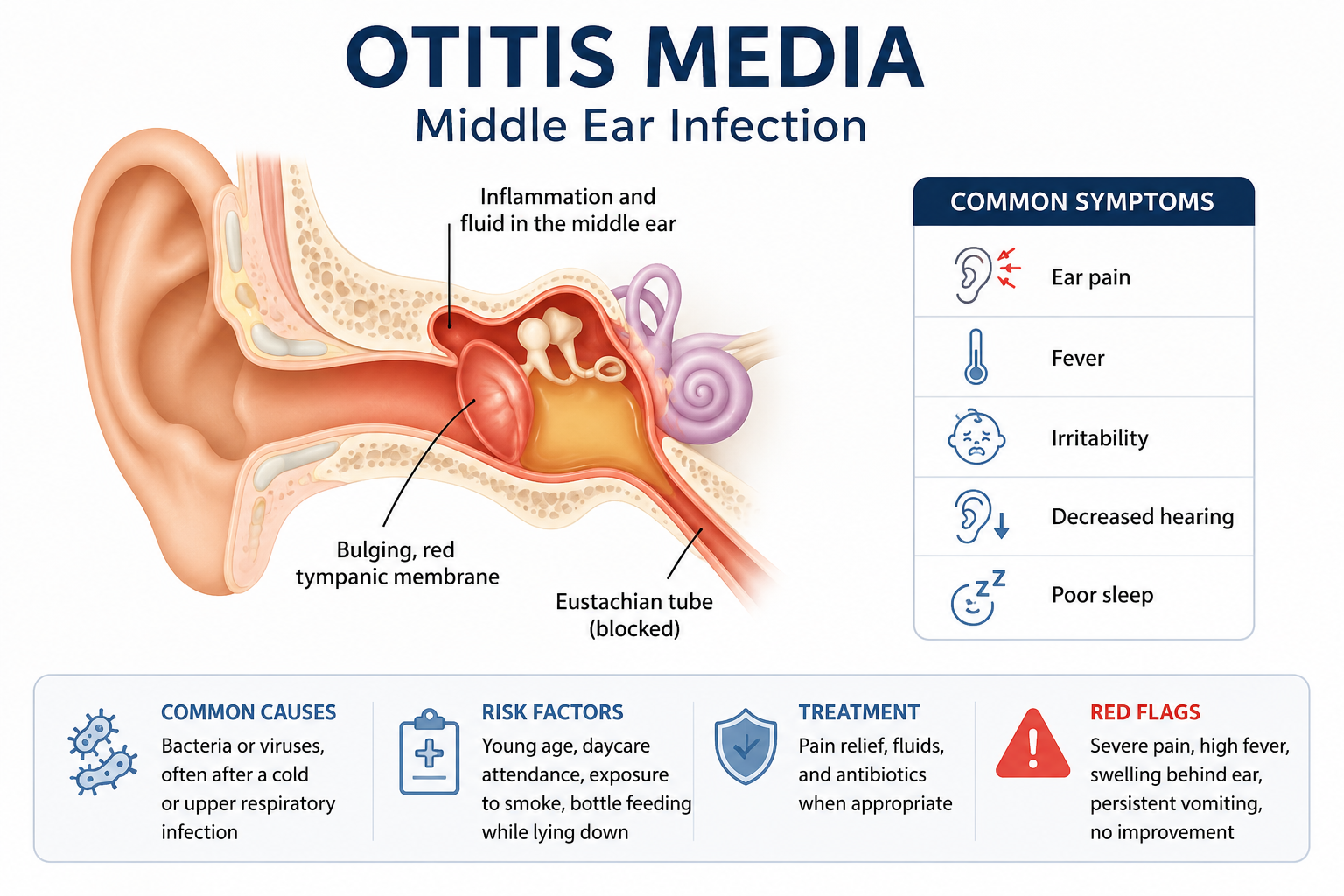
Otitis Media
OTITIS MEDIA: A HIGH-YIELD REVIEW FOR MEDICAL EXAMS
Welcome to today's episode. We will discuss one of the most common conditions seen in primary care, pediatrics, emergency medicine, and licensing examinations worldwide: Otitis Media.
Whether you are preparing for MCCQE1, TDM, CCFP, PLAB, AMC, USMLE, SMLE, DHA, or HAAD examinations, understanding otitis media is essential.
DEFINITION
Acute Otitis Media (AOM) is an infection of the middle ear characterized by inflammation and fluid accumulation behind the tympanic membrane.
It is one of the most common infections in childhood and a leading reason for antibiotic prescriptions worldwide.
Most cases occur following a viral upper respiratory tract infection that causes Eustachian tube dysfunction and subsequent bacterial infection.
COMMON CAUSES
Bacterial Causes
- Streptococcus pneumoniae
- Haemophilus influenzae
- Moraxella catarrhalis
Viral Causes
- Rhinovirus
- Respiratory Syncytial Virus (RSV)
- Influenza Virus
- Adenovirus
RISK FACTORS
- Age less than 5 years
- Daycare attendance
- Recent upper respiratory infection
- Exposure to tobacco smoke
- Bottle feeding while lying down
- Lack of breastfeeding
- Craniofacial abnormalities
- Immunodeficiency
CLINICAL PRESENTATION
Patients may present with:
- Ear pain (otalgia)
- Fever
- Irritability
- Ear tugging in children
- Decreased hearing
- Poor feeding
- Sleep disturbance
- Recent cold symptoms
Infants may present with nonspecific symptoms such as fussiness, crying, or poor feeding.
SOAP APPROACH
SUBJECTIVE
Ask about:
- Ear pain
- Fever
- Hearing changes
- Ear discharge
- Duration of symptoms
- Recent upper respiratory infection
- Previous episodes
- Recent antibiotic use
- Daycare attendance
- Smoking exposure
- Vaccination status
OBJECTIVE
Examine:
General:
- Temperature
- Overall appearance
- Hydration status
Ear Examination:
- Bulging tympanic membrane
- Erythematous tympanic membrane
- Decreased mobility on pneumatic otoscopy
- Middle ear effusion
- Perforation if present
- Purulent discharge
Additional Examination:
- Nose
- Throat
- Cervical lymph nodes
- Mastoid region
ASSESSMENT
Diagnosis is based on:
- Acute onset of symptoms
AND
- Evidence of middle ear effusion
AND
- Signs of middle ear inflammation
The most important examination finding is a bulging tympanic membrane.
DIFFERENTIAL DIAGNOSIS
- Otitis externa
- Viral upper respiratory infection
- Foreign body in ear
- Cerumen impaction
- Dental infection
- Temporomandibular joint dysfunction
- Mastoiditis
- Referred throat pain
MANAGEMENT
Pain Control
Pain management is the cornerstone of treatment.
Options include:
- Acetaminophen
- Ibuprofen
Antibiotics
Consider antibiotics for:
- Age less than 6 months
- Severe symptoms
- Bilateral disease in young children
- Otorrhea
- High-risk patients
Common first-line therapy:
- Amoxicillin
Alternative options may be required depending on allergies or recent antibiotic exposure.
COMPLICATIONS
Although uncommon, complications may occur.
Local Complications
- Tympanic membrane perforation
- Chronic otitis media
- Hearing loss
- Mastoiditis
Intracranial Complications
- Meningitis
- Brain abscess
- Lateral sinus thrombosis
RED FLAGS
These findings require urgent assessment:
- Mastoid swelling
- Protruding ear
- Severe headache
- Neck stiffness
- Altered mental status
- Facial nerve palsy
- Persistent vomiting
- Toxic appearance
- Immunocompromised patient
- Symptoms not improving despite treatment
EXAM PEARLS
- Bulging tympanic membrane is the most important diagnostic finding.
- Ear redness alone does not diagnose otitis media.
- Pain control is essential in every patient.
- Most cases follow a viral upper respiratory infection.
- Mastoiditis is a serious complication and should never be missed.
TAKE-HOME MESSAGE
When evaluating a patient with ear pain, think systematically:
History → Ear Examination → Confirm Middle Ear Effusion → Assess Severity → Identify Red Flags → Treat Appropriately.
For licensing examinations, remember one key point:
A bulging tympanic membrane in a child with ear pain and fever is acute otitis media until proven otherwise.
Thank you for joining today's episode. In the next episode, we will discuss another common and highly testable topic: Acute Otitis Externa and how to distinguish it from Otitis Media.
This content is for educational purposes only and does not constitute medical advice or clinical guidance. Read the full disclaimer.